AI Resume Screening: Benefits, Risks, and Bias Concerns for Employers
Topics covered
Free Consultation
Have questions about your HR or PEO needs? A 30-minute conversation could make a real difference for your business.
Nothing to lose — it's completely free.
Book a Free ChatFree Consultation
Have questions about your HR or PEO needs? A 30-minute conversation could make a real difference for your business.
Nothing to lose — it's completely free.
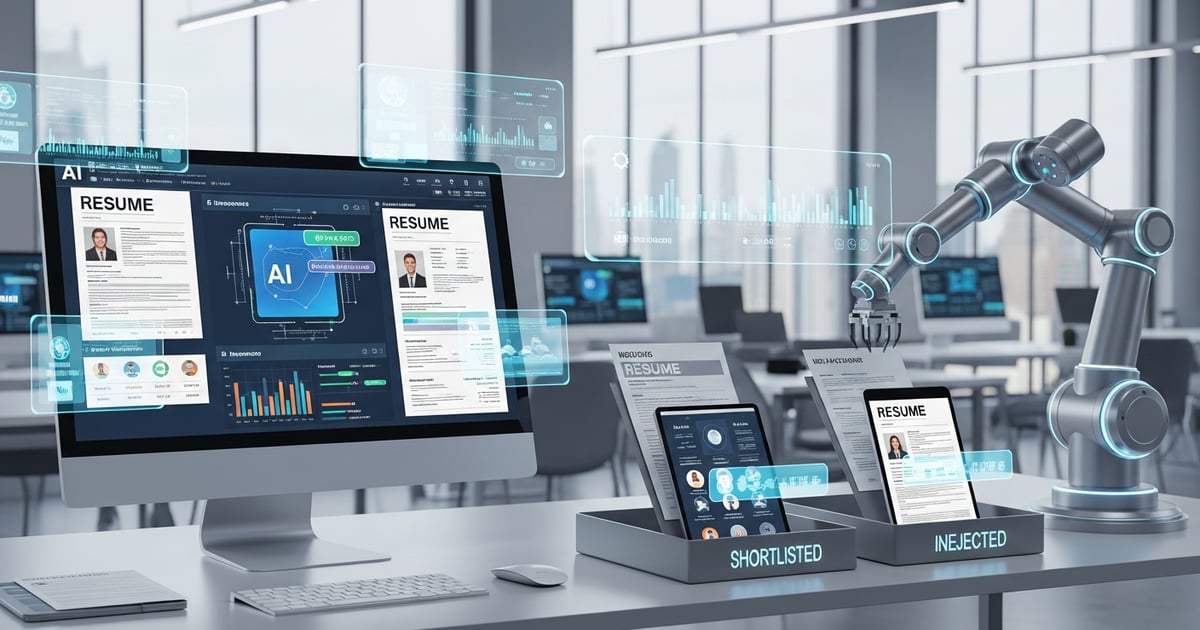
Book a Free ChatFor every open position, the average employer receives 250 applications. Reviewing them all manually would take 23 hours. AI resume screening promises to cut that to minutes—and companies using it report 30% lower recruitment costs.
But AI screening isn't without controversy. High-profile cases of biased algorithms, new regulations in multiple states, and concerns about qualified candidates being filtered out unfairly have made this technology as risky as it is promising.
This guide helps you understand both sides: when AI screening helps, when it hurts, and how to use it responsibly.
The Real Benefits of AI Screening
Speed
Reduce time-to-hire by 50%. AI can screen hundreds of applications in the time it takes to review a handful manually.
Consistency
Every resume evaluated against the same criteria. No "first of the day" vs. "last of the day" reviewer fatigue.
Wider Net
Review more candidates than would be possible manually, potentially finding qualified people who'd otherwise be missed.
Cost Reduction
Companies using AI screening report 30% lower recruitment costs on average. HR time redirects to higher-value activities.
The Risks You Need to Understand
Embedded Bias
AI learns from historical data. If past hiring decisions were biased, the AI will perpetuate those biases—potentially at scale. Amazon famously scrapped an AI recruiting tool that penalized resumes containing the word "women's."
Proxy Discrimination
Even if you remove protected characteristics, AI can find proxies. Zip codes correlate with race. Name patterns correlate with gender. College names correlate with socioeconomic background.
Regulatory Liability
New York City, Illinois, Maryland, and California now regulate AI in hiring. Violations can cost $500-$1,500 per applicant. The EEOC has made AI bias a priority enforcement area.
Missing Qualified Candidates
Keyword-matching AI can screen out candidates with non-traditional backgrounds who might be excellent fits. Career changers, self-taught professionals, and unconventional paths often get filtered out.
Regulatory Requirements (2026)
- • NYC: Annual bias audits required. Results must be published. Candidates must be notified.
- • Illinois: Video interview AI requires consent and explanation.
- • California: Broad AI transparency and opt-out rights being developed.
- • EEOC: Disparate impact analysis applies to AI just like human decisions.
Using AI Screening Responsibly
Use AI for initial screening only
Let AI identify candidates to review more closely, not make final decisions. Human judgment must remain in the loop.
Require bias audits from vendors
Any AI screening tool should come with documented bias testing. If the vendor can't provide it, find another vendor.
Notify candidates
Even where not legally required, transparency builds trust. Let applicants know AI is part of your process.
Monitor outcomes
Track who gets through screening by protected category. If patterns emerge, investigate immediately.
Keep humans accountable
"The AI did it" is not a legal defense. Ensure someone is responsible for AI-driven hiring decisions.
The PEO Advantage
A PEO can provide access to vetted, audited AI screening tools as part of their recruiting support—with the compliance monitoring and expert guidance built in. You get the efficiency benefits without managing the regulatory complexity yourself.
Neil Parr
PEO Industry Professional | PEO Benefit Partners